Designing Structure in Complexity
Redesigning an enterprise platform to simplify complex operational workflows and create a foundation built to scale.




About Skateboard
Skateboard is an enterprise platform that helps airport operations teams manage retail shop and duty-free shop onboarding, product management, and operational support. As the platform evolved, disconnected workflows made everyday operations harder to navigate and maintain. This redesign focused on creating a scalable foundation through improved information architecture, guided workflows, and a centralized support experience.
ROLE
UI UX Designer
MEET THE TEAM
2 Months - Aug 2025
TEAM


TOOLS
The Problem
As Skateboard expanded, new features and operational workflows were introduced over time to support evolving business needs. While the platform became more capable, its structure struggled to keep pace. Navigation grew fragmented, workflows became disconnected, and everyday tasks required users to move across multiple sections to complete a single operation.
The challenge was no longer improving individual screens. The platform needed a clearer structure that could support complex operations while remaining intuitive for the teams using it every day.
When Growth Created Complexity
As Skateboard evolved, new features and workflows were added over time without a unified structure. Shop onboarding, product management, and operational support became increasingly fragmented, making everyday tasks harder to navigate and maintain.
It became clear that the challenge wasn't individual screens - it was the platform itself. Before redesigning workflows, the foundation needed to be restructured to support the way operational teams actually worked.


Building a Foundation That Could Scale
Instead of redesigning workflows in isolation, I started by restructuring the platform's information architecture. Related features were grouped into clear operational modules, creating a navigation system that reflected how teams actually worked rather than how features had accumulated over time.
This new foundation improved discoverability, reduced navigation complexity, and made future workflows easier to extend.
Making Shop Operations Simpler
Shop onboarding was one of the platform's most frequently used workflows, but years of incremental additions had made it difficult to navigate. Related information was scattered across multiple screens, forcing users to switch context while completing a single task.
The redesign reorganized the workflow into clear, guided stages, making onboarding easier to understand while supporting the complexity required by airport operations.

Before

After

Payments
Configure settlement and payment rules.
Basic Store Informations
Configure operating schedules and business hours.
Timing & Availability
Configure operating schedules and business hours.
Contacts
Manage ownership and operational contacts.
Address
Capture store and warehouse locations.
Payments
Configure settlement and payment rules.
Basic Store Informations
Configure operating schedules and business hours.
Timing & Availability
Configure operating schedules and business hours.
Contacts
Manage ownership and operational contacts.
Address
Capture store and warehouse locations.
Payments
Configure settlement and payment rules.
Basic Store Informations
Configure operating schedules and business hours.
Timing & Availability
Configure operating schedules and business hours.
Contacts
Manage ownership and operational contacts.
Address
Capture store and warehouse locations.
Takeaway - A structured onboarding experience reduced complexity without removing operational flexibility.
Organizing Product Management
Managing products required users to move through disconnected screens, making bulk operations, categorization, and product maintenance unnecessarily time-consuming. The redesign introduced a more structured product management experience with improved hierarchy, clearer categorization, and streamlined editing workflows, helping teams manage large product inventories more efficiently.
Before

After
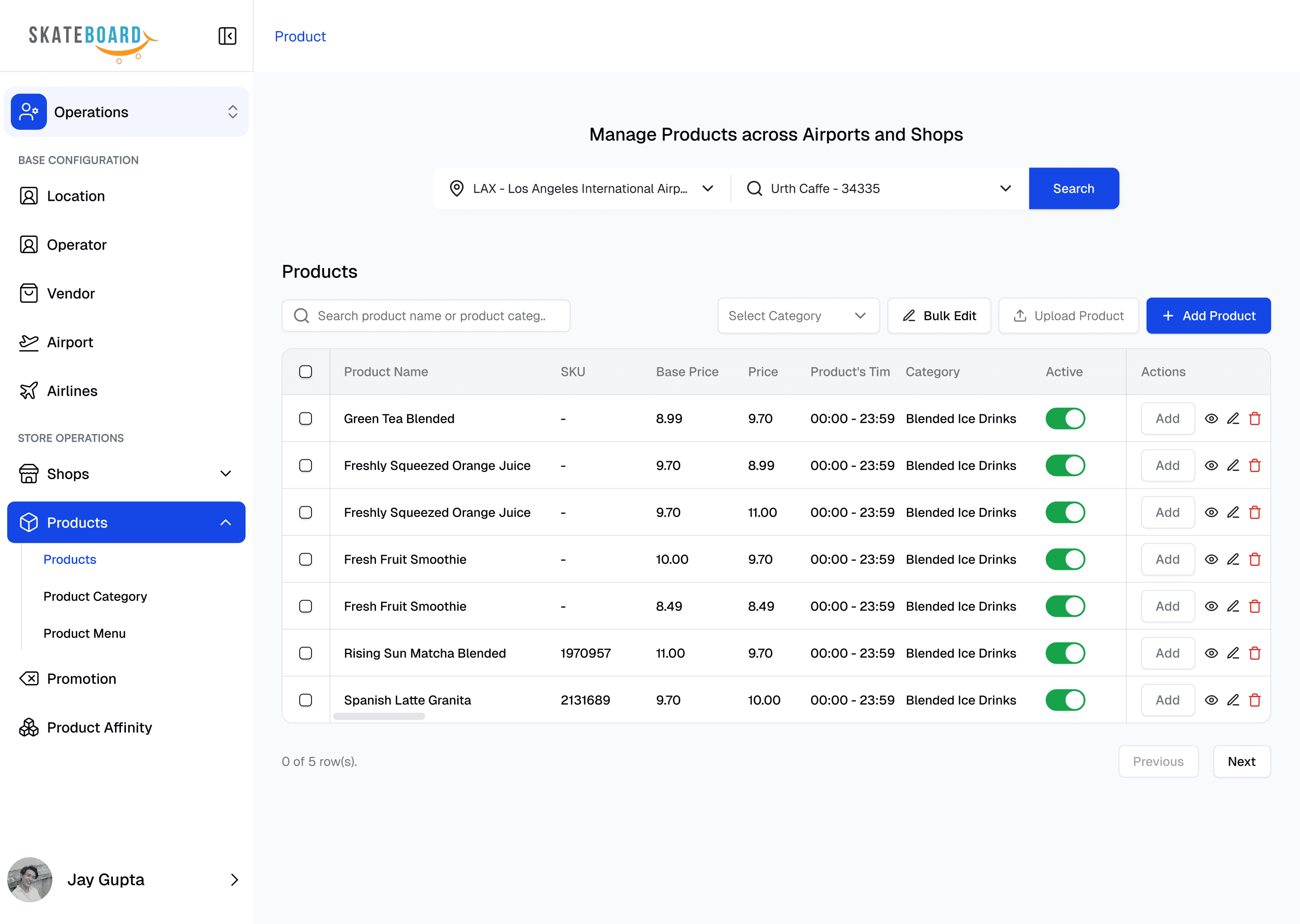
Product Affinity
Configure operational product relationships.
Product Details
Configure core product information
Product Category
Organize products into scalable categories
Product Menu
Manage airport-specific product availability.
Product Affinity
Configure operational product relationships.
Product Details
Configure core product information
Product Category
Organize products into scalable categories
Product Menu
Manage airport-specific product availability.
Product Affinity
Configure operational product relationships.
Product Details
Configure core product information
Product Category
Organize products into scalable categories
Product Menu
Manage airport-specific product availability.
Takeaway - A structured onboarding experience reduced complexity without removing operational flexibility.
Building a Support
System From Scratch
Beyond redesigning existing workflows, the platform also needed a centralized way for operational teams to raise and track support requests. Previously, support was handled outside the platform, making communication difficult to manage and follow.
I designed a dedicated Support Ticket System that standardized request creation, organized ticket types, and provided a consistent workflow for tracking issues from submission to resolution.
Support Ticket Listing
Shop Onboarding Support Ticket

Request Dashboard
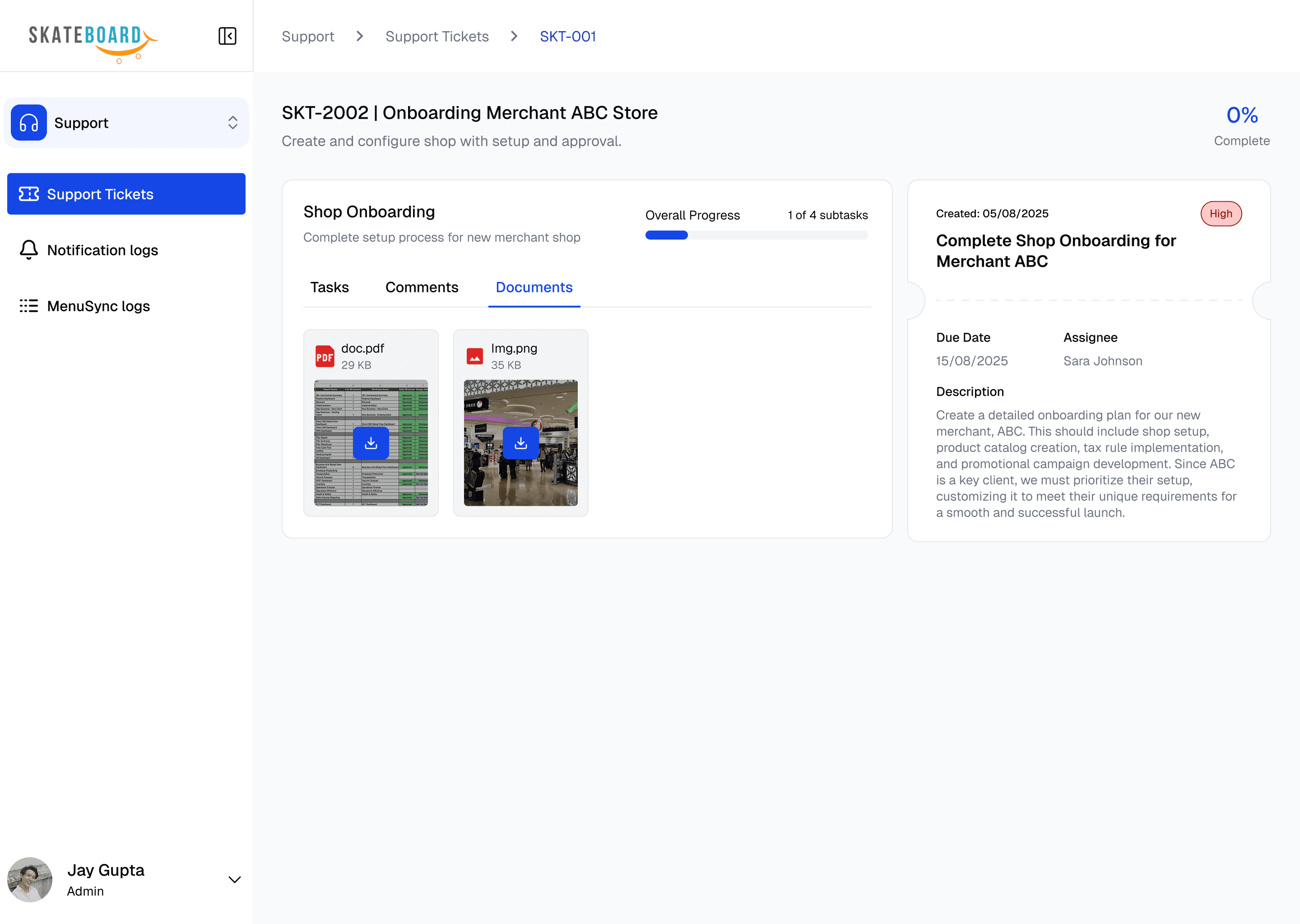
& Availability

Capture Request Details
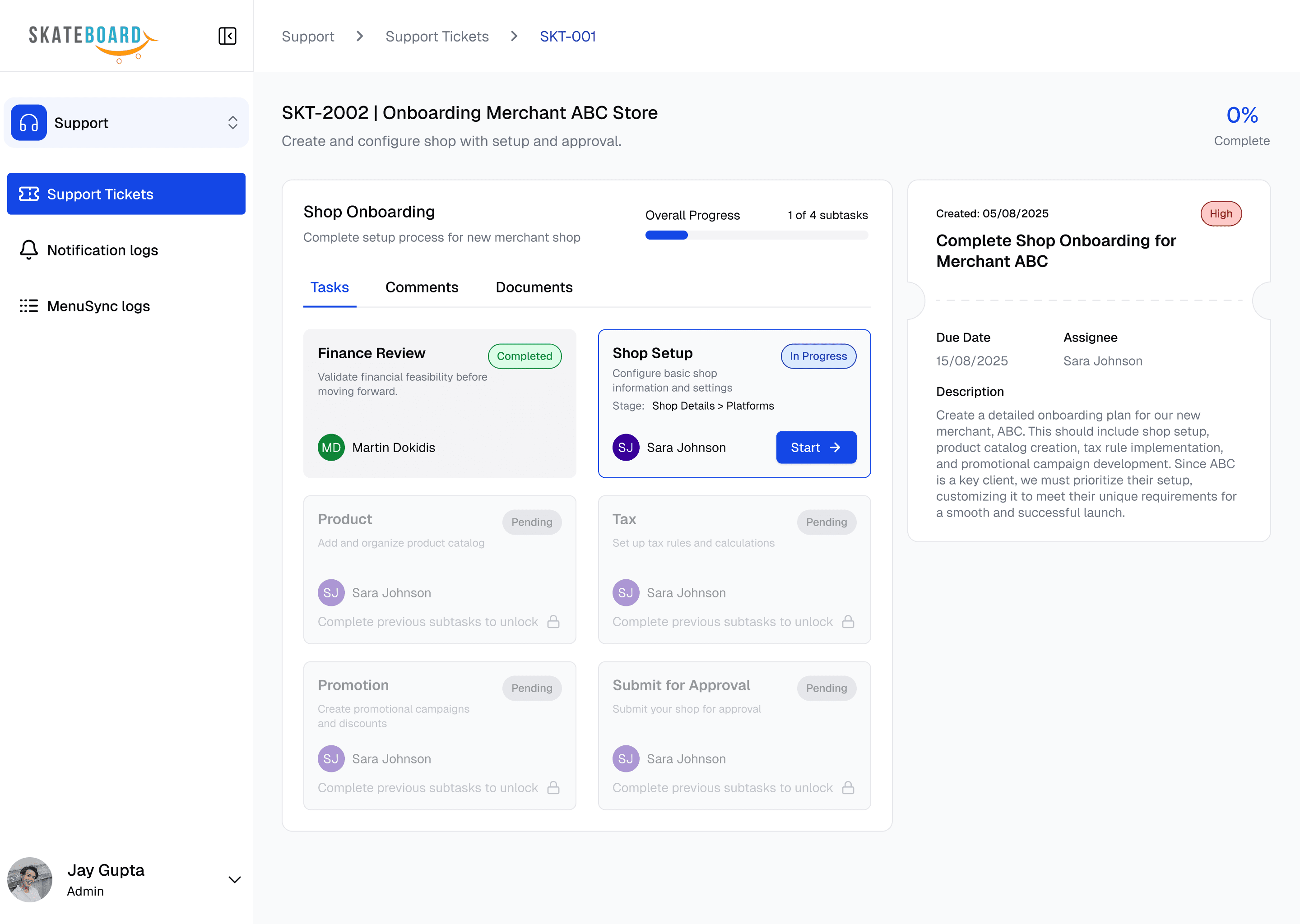
Progress Tracking

Final Approval
The Outcome
The redesign established a stronger foundation for the platform by improving navigation, simplifying complex workflows, and introducing scalable operational tools. Rather than solving isolated interface problems, the project focused on creating a system that could evolve alongside the growing needs of airport operations.
Scalable Platform
Architecture
Established a scalable foundation that supports new operational workflows without increasing navigation complexity.
Reduced Operational Complexity
Simplified information-heavy workflows into focused, task-driven experiences that reduce cognitive load and improve efficiency.
Improved Cross-Team Collaboration
Introduced standardized request management with clear ownership, approvals, and progress tracking across operational teams.
Consistent Enterprise Experience
Unified navigation, workflows, and interaction patterns across Shops, Products, and Support to create a cohesive enterprise experience.
Project Recognition
The final redesign was presented to the client and received positive feedback from stakeholders. The redesigned experience was well received by the broader team, and the project concluded with recognition for the collaborative effort that brought the redesign from concept to delivery.


Reflection
Designing Skateboard fundamentally changed how I approach enterprise UX. I learned that solving complex products isn't about refining individual screens, it's about understanding operational workflows, identifying where complexity slows people down, and creating systems that make those workflows intuitive and scalable.
Throughout this project, I redesigned fragmented experiences, restructured information architecture, and helped define a new support workflow from the ground up. Working closely with stakeholders reinforced that effective enterprise design begins with understanding the problem, aligning business and user needs, and translating operational complexity into clear, structured experiences.
More than a redesign, this project taught me to think beyond interfaces and design systems that enable teams to work with greater clarity, consistency, and confidence as products continue to evolve.
💌 Get in touch for more details.

© 2026 Rajesh Pandi. Powered by Framer